Launch offer — valid today only

📄 Digital book in PDF · read it on your phone or print it

The Tile Contractor Exam, Illustrated: Every Layer and Every Number, in the Order You Build It One Topic on Every Page

Deflection, substrates, layout, thinset and trowel notches, lippage, shower pans, movement joints and grout: the trade part of the exam, based on the TCNA Handbook and ANSI standards. One page per topic: the drawing first, then the numbers to remember. 64 illustrated pages.

GET THE ILLUSTRATED BOOK

🔒 Secure checkout · PDF by email · 30-day guarantee

Every topic, its own pageEach layer and each number drawn, with the explanation beside it
64 illustrated pages8 parts, from how the exam is built to the last-night checklist
Up-to-date sourcesChecked against the current TCNA Handbook, ANSI A108/A118 and the IRC
PDF by emailFormat

Look Inside the Book

Every page has one big drawing and a box with the numbers and layer orders you need to know:

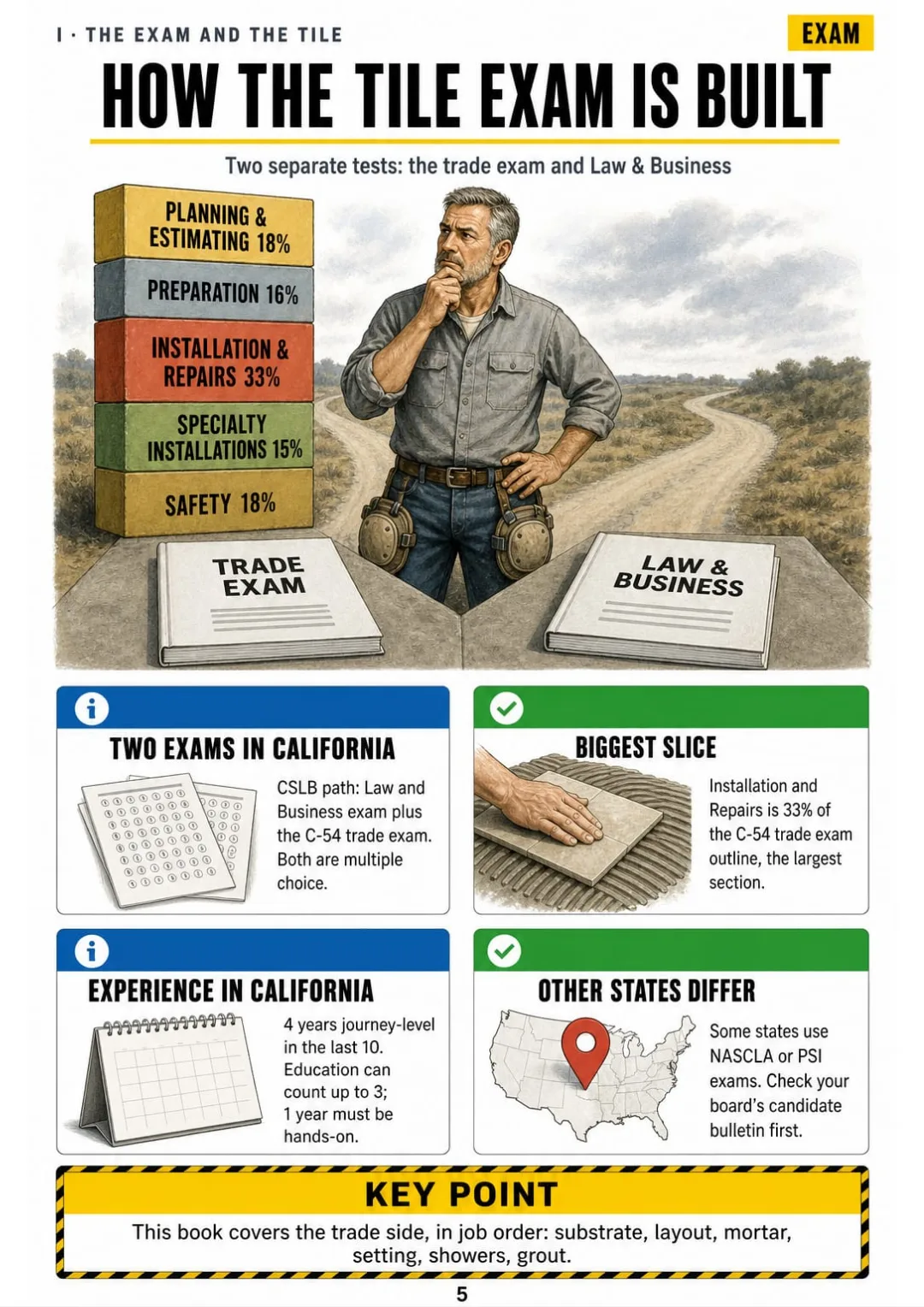
CSLB C-54 outline: Installation and Repairs 33%, Planning 18%, Safety 18%, Preparation 16%, Specialty 15%.
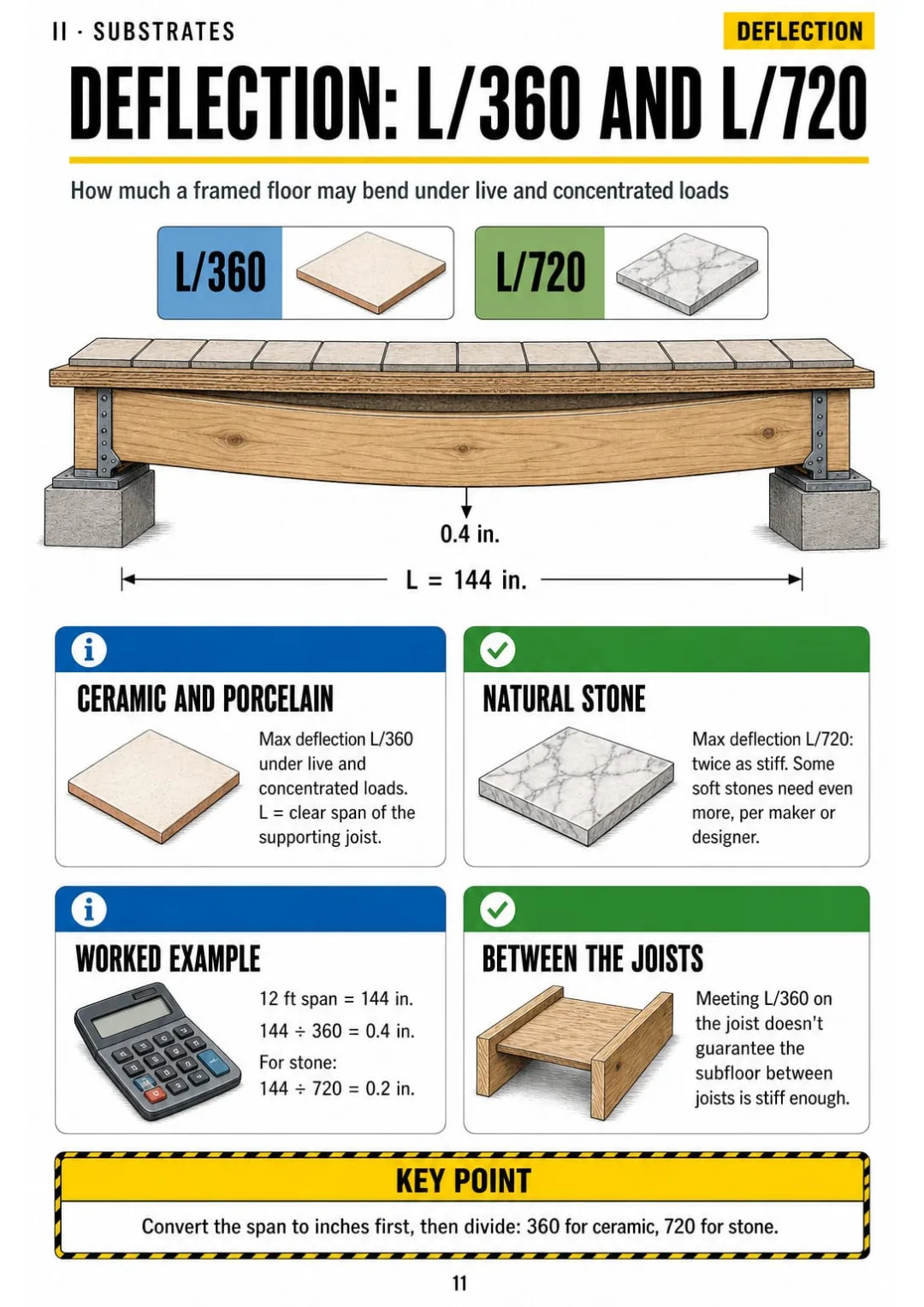
12 ft joist = 144 in. ÷ 360 = 0.4 in. max deflection for ceramic tile
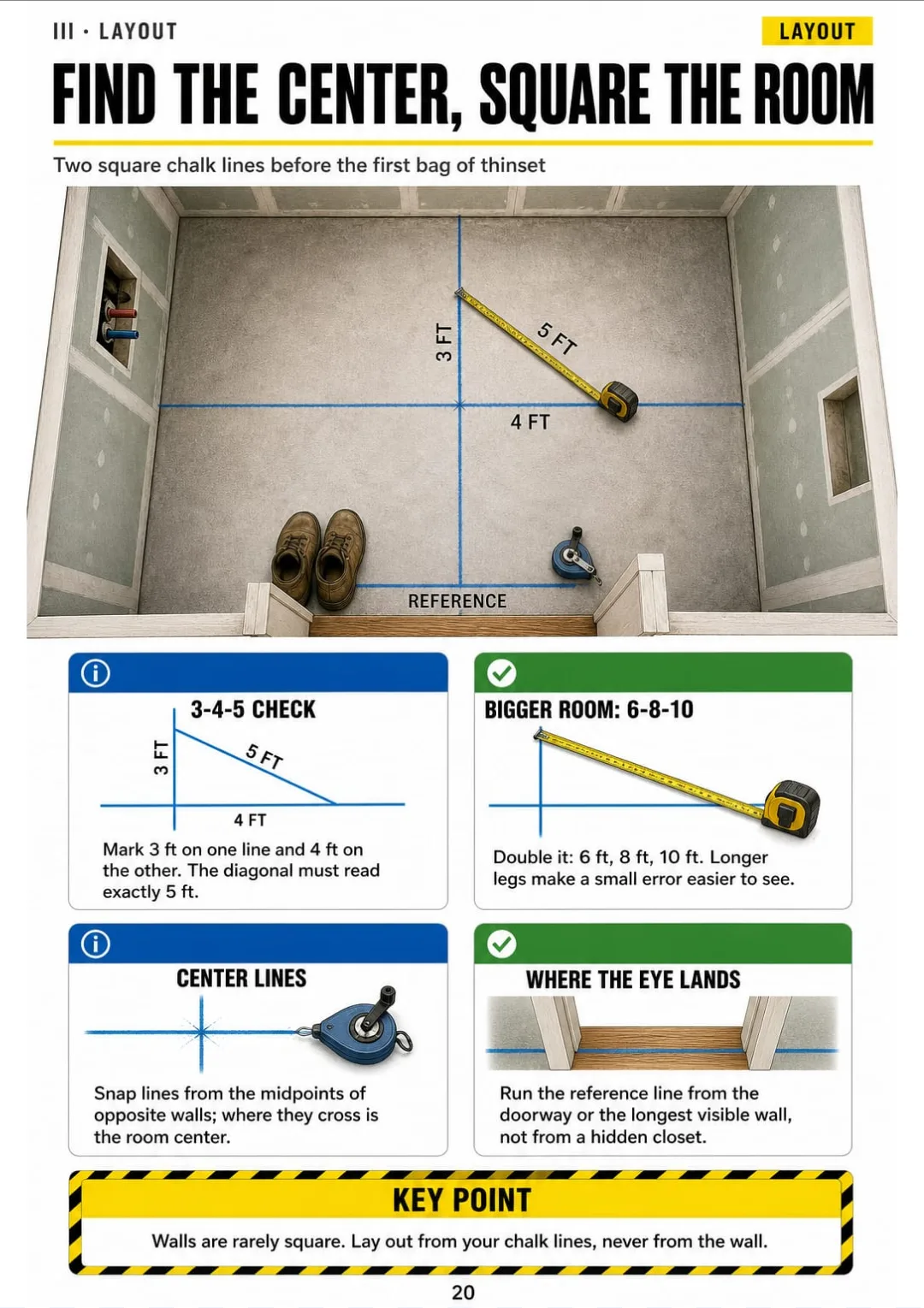
3 ft, 4 ft, 5 ft: the triangle that tells you if your lines are square
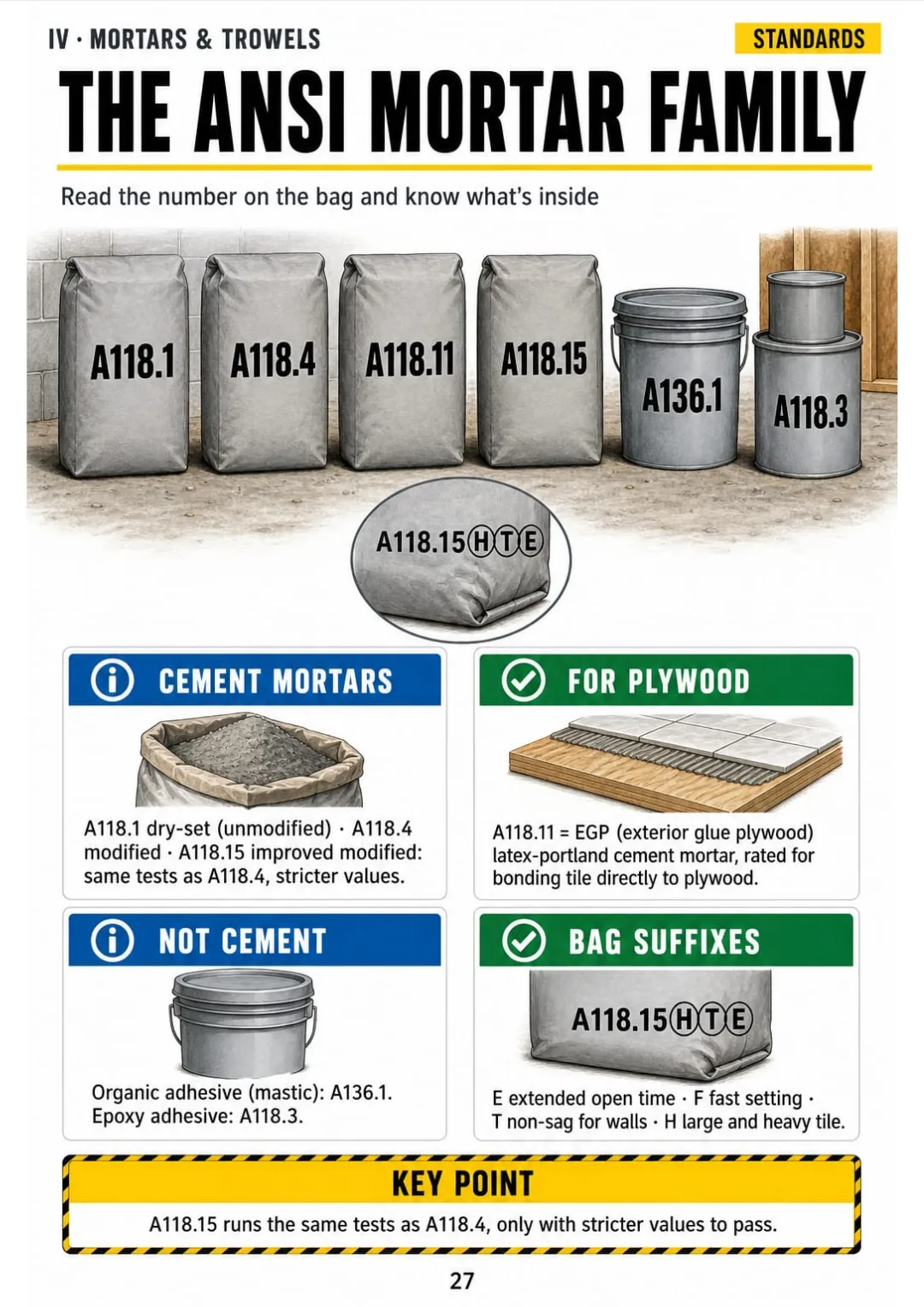
A118.1, A118.4, A118.11, A118.15, A136.1, A118.3, plus the E, F, T, H suffixes
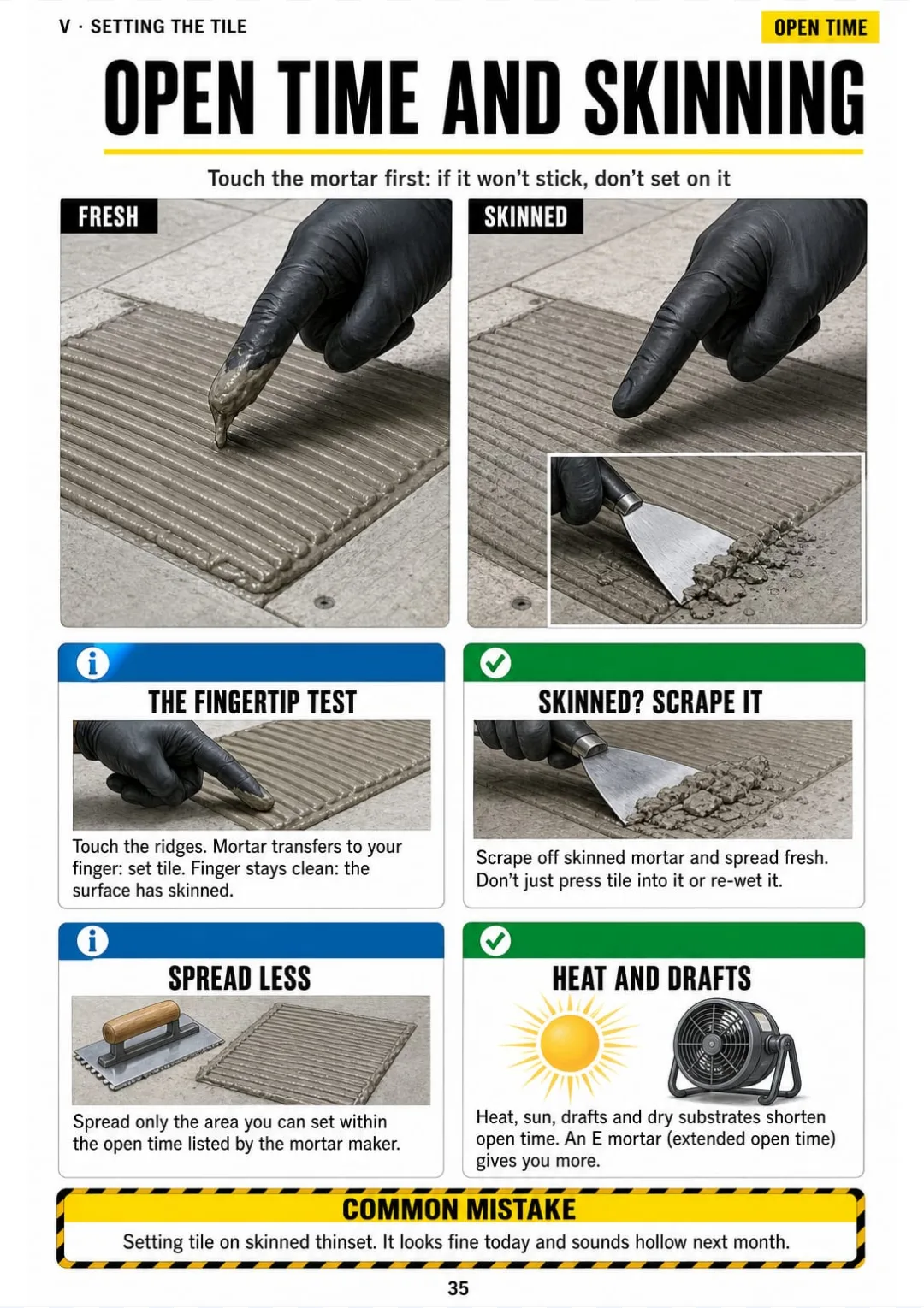
Mortar on your finger: set. Clean finger: scrape and re-spread.
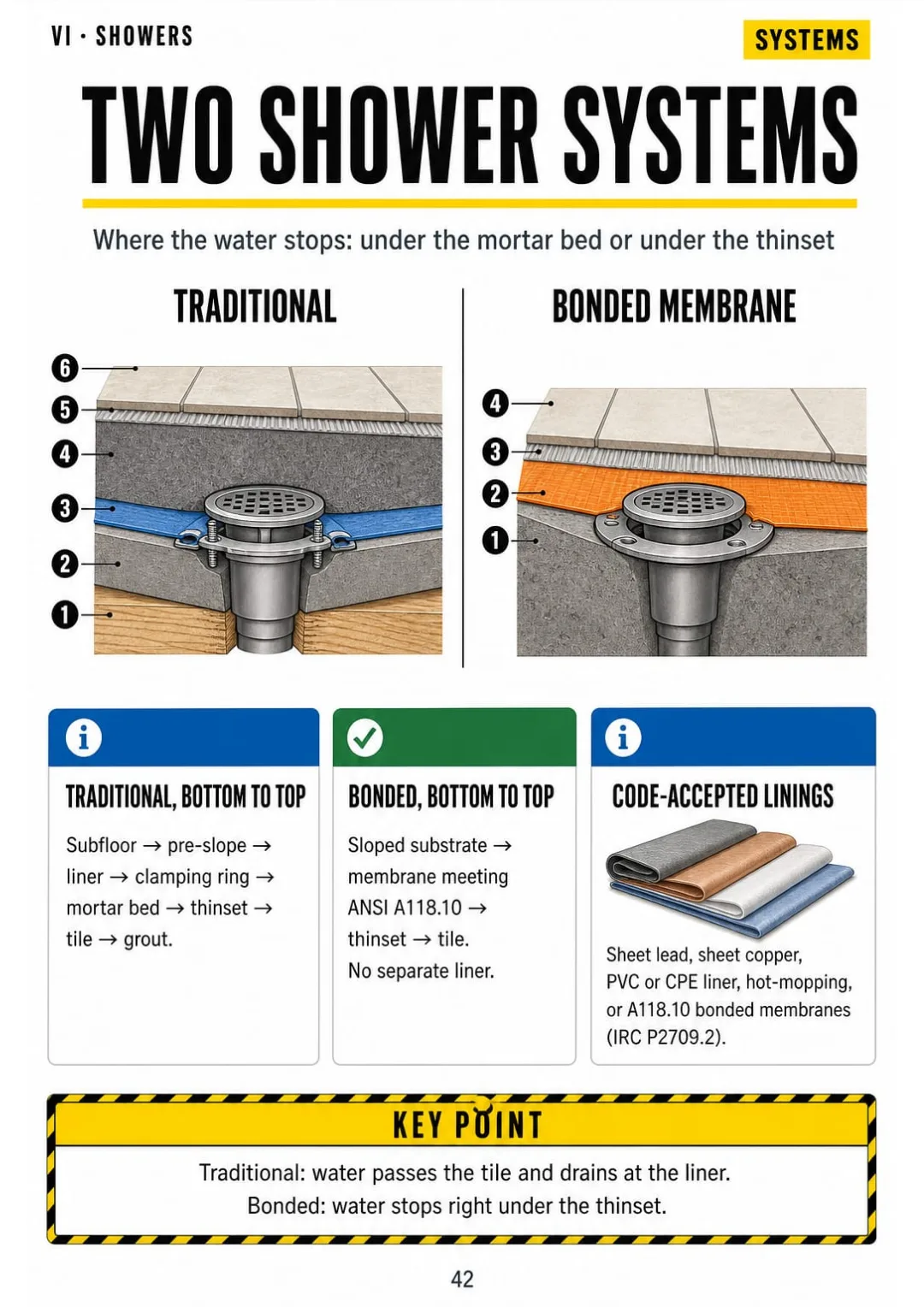
Traditional liner vs. A118.10 bonded membrane: both layer orders, drawn side by side
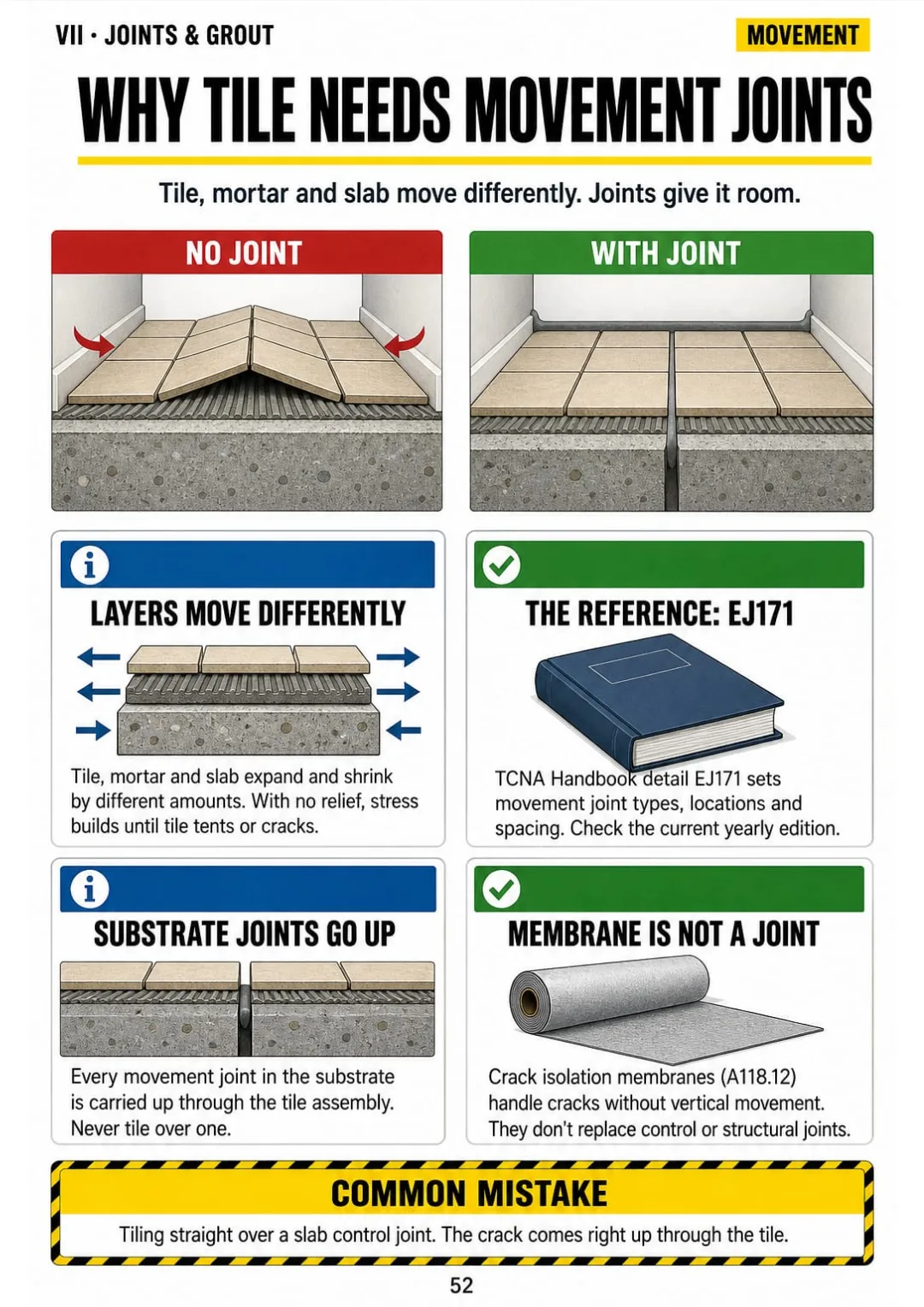
Tented floor vs. relieved floor: why EJ171 movement joints exist
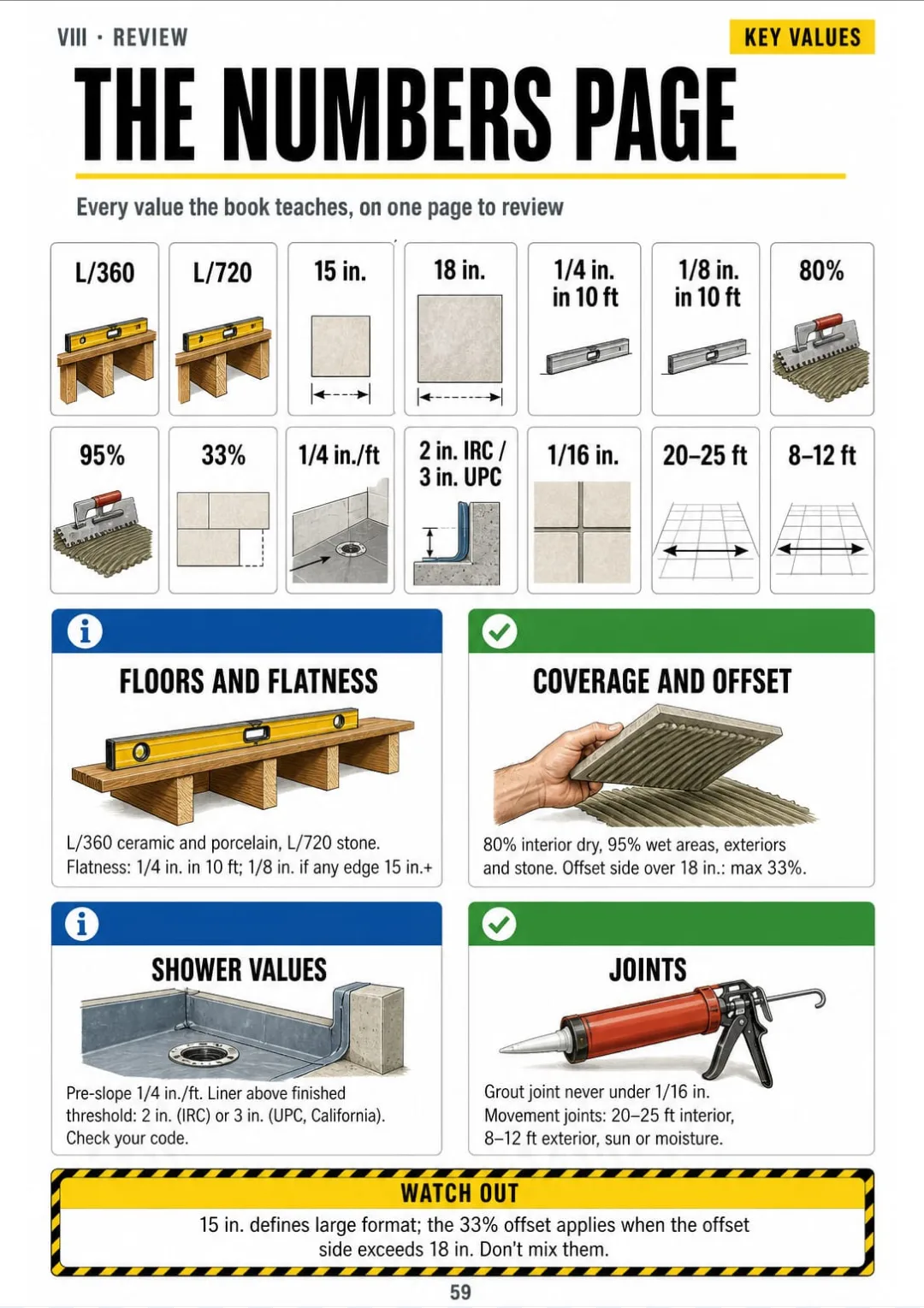
L/360, 15 in., 1/8 in. in 10 ft, 95%, 1/4 in./ft: all on one page

Swipe to see more →

These are real pages from the book. The table of contents is the full one: 8 parts and 60 topics.

The Problem Isn't You. It's How They Explained It.

You're standing in an empty bathroom with a chalk line, and the exam question in your head asks how you prove the room is square. You've done it a hundred times. You just can't say it in book words.

The study guide covers it in two dense paragraphs: reference lines, perpendicularity, the Pythagorean theorem. Nothing on that page looks like the floor you're standing on.

3 ft, 4 ft, 5 ft: the triangle that tells you if your lines are square

In this book it's one page. The room drawn from above, two center lines crossing, and the triangle marked right on the floor: 3 ft on one line, 4 ft on the other, 5 ft across. If the diagonal reads 5, you're square.

Every other topic gets the same treatment: deflection, thinset coverage, the shower pre-slope, movement joints, lippage. Each one on its own page, drawn.

So you see it, you get it, and you lay out the next floor or answer the next question without going back to the guide.

COMPARE FOR YOURSELF

Same Topic, Two Ways to Study It

THIS
  • The study guide: line after line
  • Deflection and substrates explained only in words
  • You walk into the exam with doubts
Deflection, for the purposes of tile installation, is defined as the vertical displacement of a floor framing member under the combination of dead and live loads, expressed as a ratio of the span length (L) to a denominator established by the applicable standard. For ceramic and porcelain tile, industry guidance generally requires that total deflection not exceed L/360, whereas natural stone installations require a stiffer assembly limited to L/720. Accordingly, a span of 144 inches permits a maximum deflection of 0.4 inches for ceramic tile.
FOR THIS
  • Deflection drawn on a real joist
  • The numbers in one box
  • You see it and you get it
12 ft joist = 144 in. ÷ 360 = 0.4 in. max deflection for ceramic tile
CONTENTS

Take a Look at the 8 Parts and 60 Topics

The exam and the tile, substrates, layout, mortars and trowels, setting the tile, showers and waterproofing, movement joints and grout, and a final review: 64 pages, all illustrated

IThe Exam and the Tile · pp. 5-10
  1. How a Tile Contractor Exam Is Built
  2. Book Words vs. Job Words
  3. Who Writes the Rules: TCNA, ANSI, IRC/IPC
  4. Ceramic, Porcelain and Natural Stone
  5. Reading a Tile Box and Spec Sheet
  6. Large Format Tile: The Exam Definition
IISubstrates · pp. 11-19
  1. Deflection: L/360 and L/720
  2. Plywood Subfloors
  3. Concrete Slabs: Cure and Moisture
  4. Substrate Flatness
  5. Cement Backer Board
  6. Gypsum Board: Where It's Allowed
  7. Self-Leveling Underlayment
  8. Cracks, Control Joints and Crack Isolation
  9. Uncoupling and Sound Membranes
IIILayout · pp. 20-26
  1. Find the Center, Square the Room
  2. Dry Layout: No Slivers
  3. Grout Joint Width
  4. Offset Patterns and the 33% Rule
  5. Diagonal and Herringbone Layout
  6. Wall Layout: Story Pole and Ledger
  7. Transitions and Thresholds
IVMortars and Trowels · pp. 27-34
  1. The ANSI Mortar Family
  2. LHT Mortars for Large and Heavy Tile
  3. Mixing Thinset Right
  4. Choosing the Trowel Notch
  5. Mortar Coverage: 80% and 95%
  6. Directional Troweling
  7. Back-Buttering
  8. Mud Beds: Thick Bed Mortar
VSetting the Tile · pp. 35-41
  1. Open Time and Skinning
  2. Bedding the Tile
  3. Lippage Limits
  4. Leveling Systems
  5. Cutting Tile Cleanly
  6. Edges and Trim
  7. Temperature and Cure
VIShowers and Waterproofing · pp. 42-51
  1. Two Shower Systems
  2. The Pre-Slope: 1/4 in. per Foot
  3. The Shower Pan Liner
  4. Clamping Drain and Weep Holes
  5. Curb and Threshold
  6. Bonded Waterproofing Membranes: ANSI A118.10
  7. The Flood Test
  8. Niches and Benches
  9. Linear Drains and Curbless Showers
  10. Steam Showers
VIIMovement Joints and Grout · pp. 52-58
  1. Why Tile Needs Movement Joints
  2. Where Movement Joints Go
  3. Building a Movement Joint
  4. Grout Types by ANSI Number
  5. Sanded or Unsanded
  6. Grouting Step by Step
  7. Sealing and Grout Problems
VIIIReview Before Exam Day · pp. 59-64
  1. The Numbers Page
  2. The Standards Map
  3. Estimating a Bathroom Takeoff
  4. Hollow Tiles: Find the Cause
  5. Shower Layers in Order
  6. Last Night Checklist

One Page, One Topic, All Clear

Think of it this way:

A 24x48 porcelain floor goes down on a slab next week, and the exam asks the same thing in book words: which mortar, what coverage, how flat.

You open the page on mortar coverage and see the back of a tile drawn twice: 80% for dry areas, 95% for wet areas and exteriors, with the trowel ridges collapsed the right way.

Mortar on your finger: set. Clean finger: scrape and re-spread.

Same with deflection, the shower pre-slope, the ANSI mortar numbers, movement joints and lippage: each one on its own page.

Tile Contractor Illustrated is 8 parts and 60 topics, all drawn, and it closes with a review section: the numbers page, the standards map and a bathroom takeoff.

What you see drawn, you don't have to memorize.

What's Inside Tile Contractor Illustrated:

Ipp. 5-10

The Exam and the Tile

How a tile contractor exam is built, book words vs. job words, who writes the rules, ceramic vs. porcelain vs. stone, reading a tile box, and what counts as large format.

IIpp. 11-19

Substrates

Deflection at L/360 and L/720, plywood subfloors, slab cure and moisture, flatness, backer board, where gypsum board is allowed, self-leveler, cracks and membranes. You'll know if a floor is ready for tile before the first trowel of thinset.

IIIpp. 20-26

Layout

Finding the center and squaring the room, dry layout without slivers, joint width, offset patterns and the 33% rule, diagonal and herringbone, walls, transitions.

IVpp. 27-34

Mortars and Trowels

The ANSI mortar family, LHT mortars, mixing, choosing the trowel notch, 80% and 95% coverage, directional troweling, back-buttering and mud beds.

Vpp. 35-41

Setting the Tile

Open time and skinning, bedding the tile, lippage limits, leveling systems, clean cuts, edges and trim, temperature and cure.

VIpp. 42-51

Showers and Waterproofing

Liner vs. bonded membrane, the 1/4 in. per foot pre-slope, the pan liner, clamping drain and weep holes, curbs, A118.10, the flood test, niches, linear drains and steam showers.

VIIpp. 52-58

Movement Joints and Grout

Why tile needs movement joints, where they go, how to build one, grout types by ANSI number, sanded or unsanded, grouting step by step, sealing and grout problems.

VIIIpp. 59-64

Review Before Exam Day

The numbers page, the standards map, a bathroom takeoff, hollow tiles, shower layers in order and a last-night checklist.

At the end of the book: A one-page numbers sheet, a standards map and a worked bathroom takeoff.
Plus: 2 Free Books

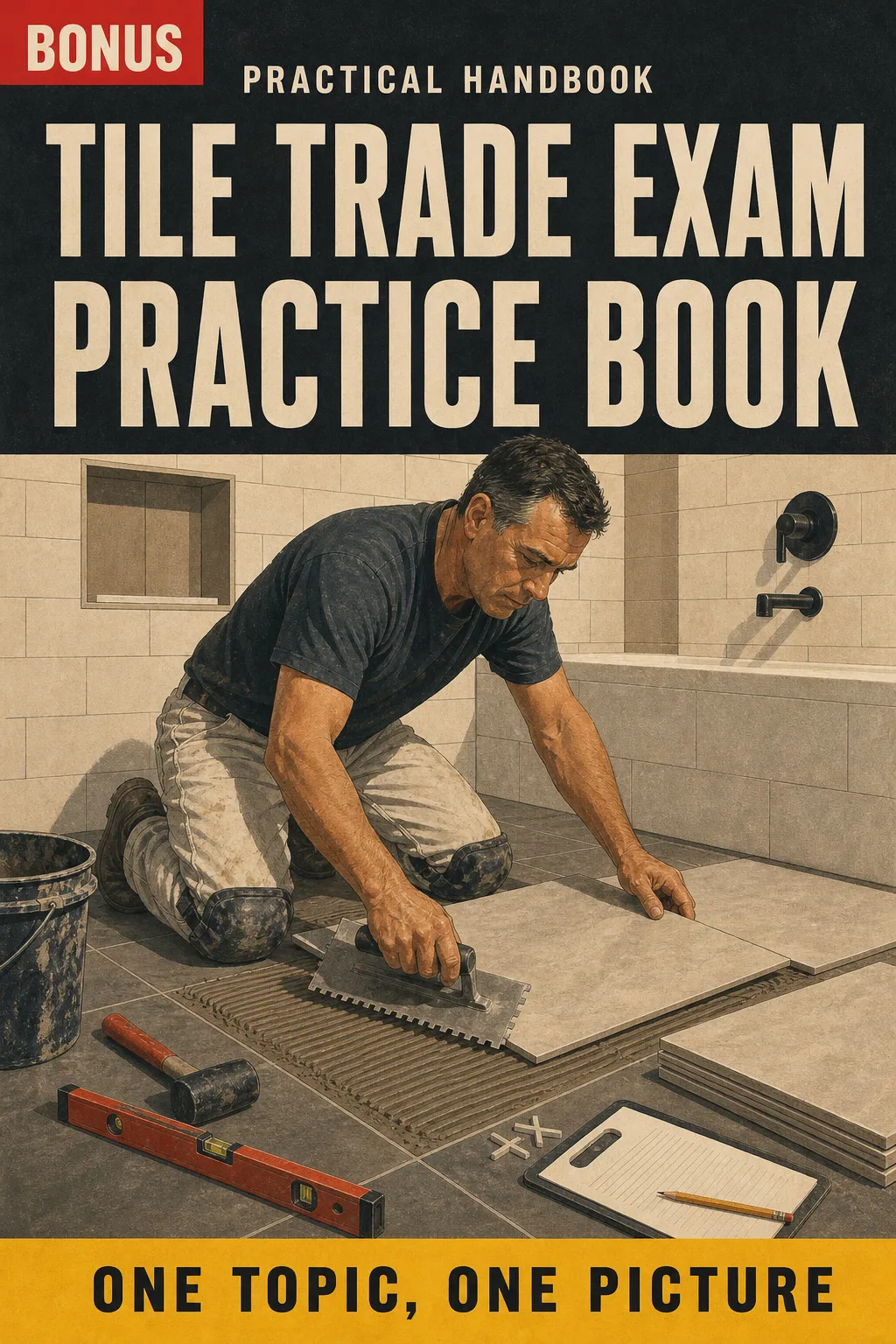
Tile Trade Exam Practice Book

BONUS 1: «Tile Trade Exam Practice Book»

Value on its own: US$ 17.90

Exam-style questions on substrates, mortars, showers and grout, each answer explained and linked to the page where it's drawn, so you find your weak spots before exam day.

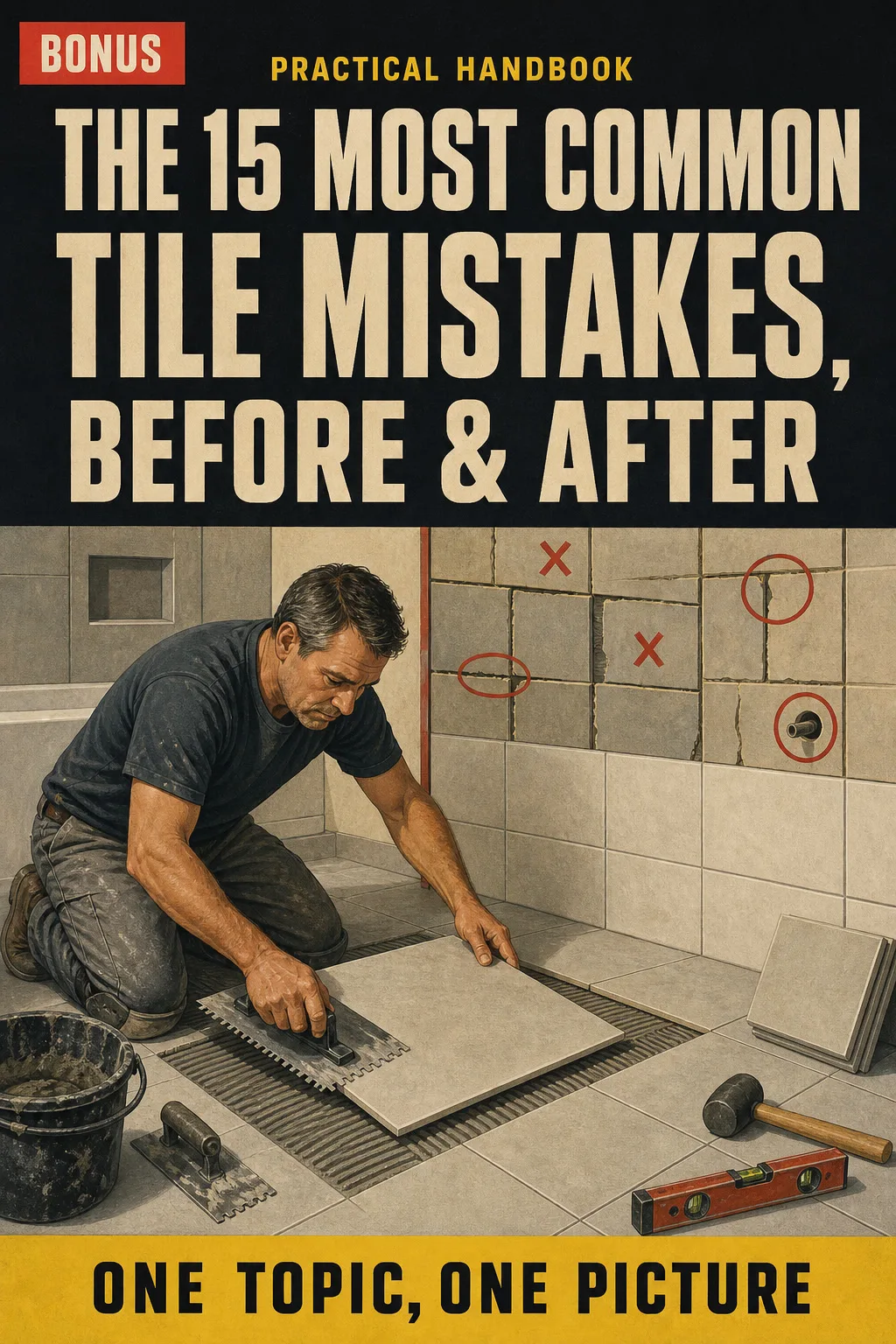
The 15 Most Common Tile Mistakes, Before & After

BONUS 2: «The 15 Most Common Tile Mistakes, Before & After»

Value on its own: US$ 14.90

The most common installation errors drawn side by side, wrong vs. right, from hollow tiles to missing movement joints, so you can review them in minutes.

Tile Contractor Illustrated with 2 Free Books

  • Tile Contractor Illustrated: 64 illustrated pagesUS$ 63
  • BONUS 1: Tile Trade Exam Practice BookUS$ 17.90
  • BONUS 2: The 15 Most Common Tile Mistakes, Before & AfterUS$ 14.90
  • High-resolution PDF to printIncluded
Total value US$ 95.80
YOUR PRICE:
US$ 27
You save US$ 68.80
YES, I WANT TILE CONTRACTOR ILLUSTRATED FOR US$ 27

📄 This is a digital PDF book sent to your email: nothing is printed or shipped.

Secure purchaseEncrypted payment30-day guarantee

PDF by email: We email you Tile Contractor Illustrated as a PDF, together with the two free books. It's a single payment: no installments, no extra charges.

Who This Book Is For

You're studying for the license

You're studying for the license

Everything you already do with your hands, drawn and named the way the exam names it. One page a night after work is enough to move forward.

Your exam date is close

Your exam date is close

The numbers page and the standards map put L/360, 95% coverage and 1/4 in. per foot on one sheet, to review the week before.

You already run tile jobs

You already run tile jobs

Print the substrate and shower pages and keep them in the truck, to check a layer order or a number right on site.

Everything You Get Today

US$ 95.80US$ 27
YES, I WANT TILE CONTRACTOR ILLUSTRATED FOR US$ 27

📄 This is a digital PDF book sent to your email: nothing is printed or shipped.

30DAYS
GUARANTEE

30-Day Guarantee

Try Tile Contractor Illustrated for 30 days, bonus books included.

We refund everything if the file won't open, if the book isn't what you see here, if you were charged twice or if the email doesn't arrive. Just email us.

You pay once. No subscriptions.

Frequently Asked Questions

Is it for me if I've been setting tile for years?

Yes. It doesn't teach you to set tile. It puts the exam's words and numbers on what you already do, one drawing per page, in job order from substrate to grout.

Where does the content come from?

From the current TCNA Handbook, the ANSI A108, A118, A136.1 and A137.1 standards, the IRC and IPC, and the candidate information published by state licensing boards such as the California CSLB.

Is this official material?

No. It's an independent study book, not affiliated with TCNA, ANSI, ICC, CTEF or any state board. It doesn't come with a certificate and doesn't count toward a license or an installer certification: it's for studying and reviewing.

Does it work for my state's exam, or only California's?

The trade content comes from national standards: the current TCNA Handbook, ANSI A108/A118 and the IRC. The pages on how the exam is built use California's C-54 as the example. It's a visual review of the trade section, not a full course, and it doesn't cover the Law & Business exam. Each state sets its own exam, so check your board's candidate information to see which sections yours includes.

Are the practice questions the real exam questions?

No. They're written for this book, in exam style, and each answer points to the page where the topic is drawn.

When and how do I get it?

The book and the 2 bonus books arrive as PDFs by email, at the address you enter at checkout.

Do I have to pay every month?

No. It's a one-time payment.

Can I have it on paper?

Yes. The PDF prints on regular letter-size paper, at home or at a print shop, so you can keep the pages in the truck.

How does the refund work?

You have 30 days. We refund everything if the file won't open, if the book isn't what you see on this page, if you were charged twice or if the email doesn't arrive: just email us.

Before You Close This Page

No more rereading pages that don't stick.

Deflection, coverage and the shower pan: you see them drawn, and that's it.

You walk into the exam knowing where everything goes.

Drawings make studying faster.

The book is right below.

One-time payment: US$ 27 · Guarantee: 30 days · PDF by email

YES, I WANT TILE CONTRACTOR ILLUSTRATED FOR US$ 27

📄 This is a digital PDF book sent to your email: nothing is printed or shipped.